
IMAGING & INVESTIGATIONS
Different tests for different tissues...
A guide to understand the different types of hospital-based imaging that can be done, what is involved and what to expect.

Which scan for which problem?
In hospitals, a variety of imaging and diagnostic tests are available to assist healthcare professionals in diagnosing and treating medical conditions. Some types of imaging are more suitable for softer tissues, whereas others are better for different conditions/organs. Understanding these tests can help patients appreciate their importance in the healthcare process and prepare for what to expect.
A radiographer is the person trained in performing the scan.
A radiologist is a doctor trained in reading and reporting the scan.
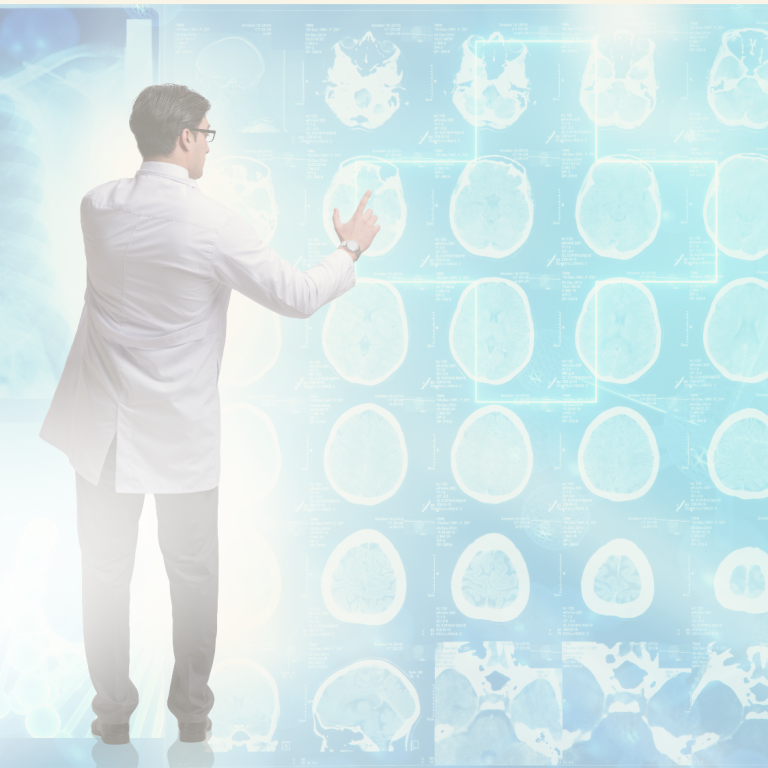
Bones vs soft tissues...
X-RAYS
Purpose: To view the inside of the body, particularly bones and some organs (particularly lungs, and checking for air around the bowel).
Common Uses: Fractures, infections, and lung problems. Also useful for looking for certain foreign objects within the body (e.g.coins or metal fragments).
Procedure: A small amount of radiation passes through the body, creating images on film or digital media.
ULTRASOUND
Purpose: Uses high-frequency sound waves to create images of soft tissues and organs. No radiation exposure.
Common Uses: Pregnancy monitoring, abdominal organ assessment, and diagnosing conditions in body cavities (e.g., gallbladder, kidneys). Sometimes used for therapeutic purposes.
Procedure: A gel is applied to the skin, and a transducer is moved over the area to capture images.
CT SCANS
Purpose: A series of 'X-ray like images' (but better resolution) taken from different angles to create detailed cross-sectional images. This allows for being able to view organs and 'move' through the body in a more 3D approach.
Common Uses: Detecting tumours, internal bleeding, and complex fractures.
Procedure: The patient lies on a table that moves through a circular scanner while images are taken. There is some radiation exposure with a CT scan. Sometimes a dye known as contrast is injected into the blood stream to help visualised vessels.
Softer tissues...
MRI SCANS
Purpose: Uses strong magnets and radio waves to create detailed images of organs and tissues. (no radiation)
Common Uses: Brain, spinal cord, and joint examinations; evaluating soft tissues.
Procedure: The patient lies in a large tube-like machine, which takes time to generate images.
MAMMOGRAPHY
Purpose: A specific type of X-ray used to detect breast cancer.
Common Uses: Routine screening for women over 50 or those at high risk for breast cancer.
Procedure: Breasts are compressed between two plates to capture detailed images.
FLUOROSCOPY
Purpose: Provides real-time imaging of the movement of internal structures.
Common Uses: Evaluating swallowing disorders, digestive system function, and catheter placements.
Procedure: Continuous X-ray images are taken, often using a contrast agent.
Things less heard of...
Nuclear Medicine Scans
Purpose: Uses small amounts of radioactive materials to diagnose and treat disease.
Common Uses: Imaging of the thyroid, bone scans, and cancer detection.
Procedure: The radioactive material is injected, swallowed, or inhaled, and images are taken with a special camera.
ECG
Purpose: Measures the electrical activity of the heart.
Common Uses: Diagnosing arrhythmias, heart attacks, and other heart conditions.
Procedure: Electrodes are placed on the skin to record the heart’s electrical signals.
ENDOSCOPY
Purpose: A procedure that uses a flexible tube with a camera to view the inside of organs.
Common Uses: Gastrointestinal issues (e.g., colonoscopy) and respiratory examinations (e.g., bronchoscopy).
Procedure: Sedation is often used; the tube is inserted through the mouth or rectum to view the interior of organs.
OTHER RESOURCES TO HELP

NHS VS PRIVATE
A guide to explain the differences between the NHS and private healthcare. Independently presented to provide a balanced view to allow you to make the decision that is right for you.
Help us continue our work
We are an independent charity, reliant on donations and sponsorship...
As a small but rapidly growing charity, our services rely on every penny donated from individuals, fundraising and sponsors. Every donation goes directly to the vital services straight to people who are facing their mortality at a young age.
Make a one of donation, donate regularly, sponsor or organise a fundraiser. Every pound goes directly to where it is needed, any health challenge.
Information you can trust...
We are regulated by the Patient Information Forum which means we hold the PIF Tick of approval. This shows that the information we share is reliable and safe.